Microfabrication
Microfabrication
Microfabrication is a crucial technology for creating miniaturized devices and structures with high precision. It plays a fundamental role in microelectronics, microfluidics, MEMS (microelectromechanical systems), and biomedical devices, enabling the development of complex, high-performance systems at the microscale.
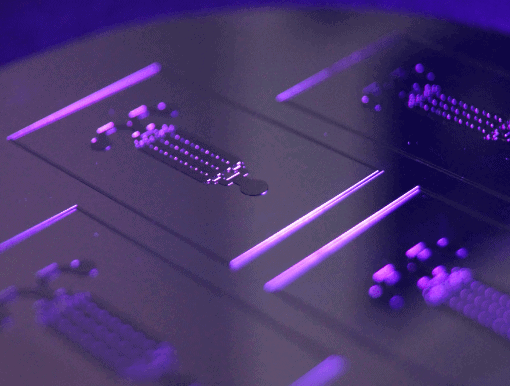
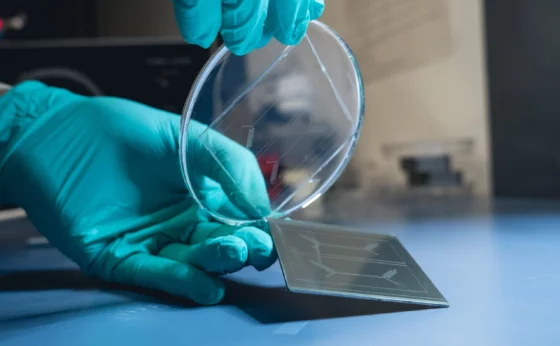
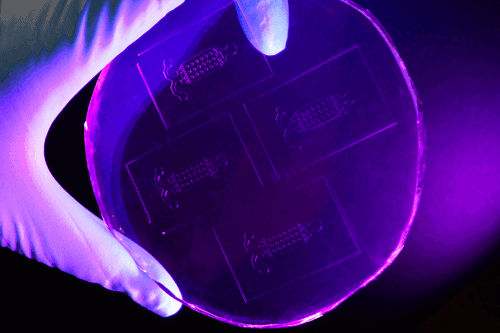
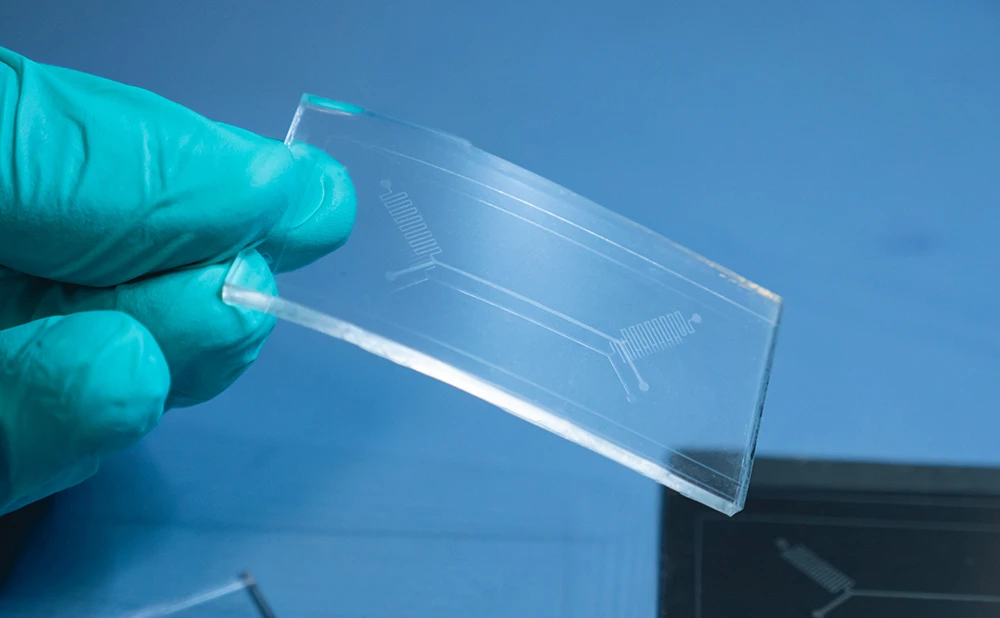
By utilizing techniques such as photolithography, etching, deposition, and bonding, microfabrication allows for the production of microfluidic chips, biosensors, lab-on-a-chip devices, and semiconductor components. Advances in this field continue to push the boundaries of miniaturization, efficiency, and material innovation, driving progress in industries such as healthcare, electronics, and energy.
This review explores the fundamental techniques, key applications, and emerging trends in microfabrication.
Microfabrication Techniques
Microfabrication relies on a variety of advanced manufacturing processes, including:
- Photolithography – A process used to pattern thin films on a substrate using light-sensitive materials.
- Soft lithography – A technique for fabricating microfluidic devices using elastomeric materials like PDMS.
- Etching (wet and dry) – Methods for selectively removing material to create microstructures.
- Thin-film deposition – Techniques such as physical vapor deposition (PVD) and chemical vapor deposition (CVD) for layering materials.
- Bonding and integration – Processes like plasma bonding and thermal fusion for assembling multilayered microfluidic and electronic devices.
Each technique is selected based on the material properties, device requirements, and desired resolution.
Key Applications of Microfabrication
Microfabrication is used in a variety of industries, enabling the development of:
- Microfluidic devices – Used for lab-on-a-chip systems, drug screening, and diagnostics. (Read more)
- MEMS sensors and actuators – Found in automotive, aerospace, and medical devices. (More info)
- Biomedical implants and biosensors – Enhancing patient monitoring and personalized medicine. (Learn more)
- Semiconductor manufacturing – Essential for integrated circuits, transistors, and high-performance electronics.
- Optical and photonic devices – Enabling lasers, waveguides, and fiber-optic communications.
Advantages of Microfabrication
- High precision – Enables the production of nanoscale and microscale features with extreme accuracy.
- Scalability – Allows for mass production of microstructures for commercial applications.
- Material versatility – Supports metals, polymers, silicon, and hybrid materials for diverse applications.
- Enhanced functionality – Integrates mechanical, electrical, and fluidic components into compact systems.
Further Reading
For more information on microfabrication techniques and their applications, explore: