Publications
For all publications featuring our products, please click here.
For all application notes based on our product, please click here.
For reviews of our product, please click here.




Accurately control pressure to push and pull liquid
Pair it with a flow sensor for accurate flow control
Down to 0.005% of the full scale range of pressure
Automate and control your microfluidic experiment



Dr. Hayden Taylor
University of California, Berkeley, United States
We are using the device extensively at the moment and I have been quite impressed by its capabilities

Dr. Arne Lüken
Chemical Process Engineering at RWTH Aachen
The Elveflow OB1 enables us precise pressure and flow control and measurement in various microfluidic and lab scale projects from tissue engineering to membrane filtration analysis.

Dr. Nelson BC Serre & Dr. Matyáš Fendrych
Cell Growth Lab, Department of Experimental Plant Biology, Charles University, Czech Republic
After an easy installation, we are now using the OB1 and flow sensors routinely and are very satisfied by both the flow stability and the software user-friendly interface.

Seongjin Park, Senior Engineer
Department of Physics, Syracuse University
We use Elveflow instrument in several projects and they are great to work with. The LabVIEW implementation was also very successful. I hope more people can get to know the OB1 system

Dr. Pushparani Micheal Raj
Max Planck Institute of Quantum Optics, MAX IV Laboratory
I have extensively used Elveflow systems in the world's most brilliant X-ray source. Elveflow systems are precise, controlled and adaptive to many samples under adverse conditions.
Designed by scientists for scientists, the versatile and powerful OB1 MK4 pressure controller provides the perfect flow control for all kinds of applications.
Whether you need pressure or vacuum, low or high flow rate, for short or week-long processes and experiments, the OB1 MK4 is the ideal instrument for your microfluidic needs.
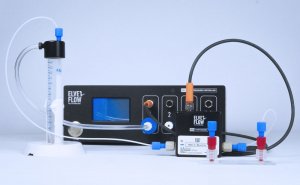
The Elveflow OB1 MK4 is one of the best performing microfluidic flow control instruments worldwide that uses piezoelectric regulators. The piezoelectric technology gives you 20 times more precise and 10 times faster flow control than any other flow controller on the market.

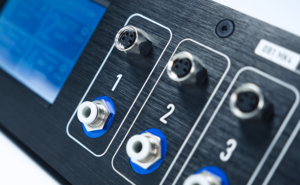
The OB1 MK4 can be configured according to your needs. In one piece of equipment, you can have up to 4 pressure and/or vacuum channels (and other customized options).
If your needs change, the instrument can be upgraded later, in any way you want.
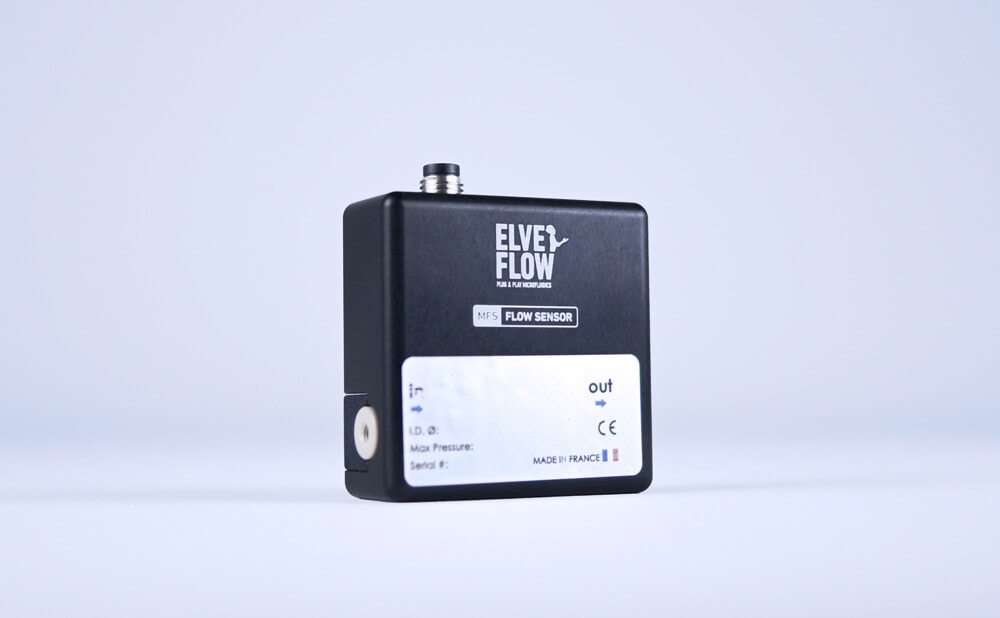
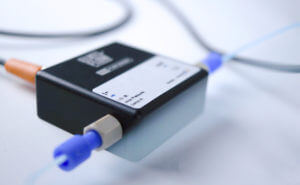
Connect the OB1 MK4 to a standard liquid flow rate sensor
(MFS)
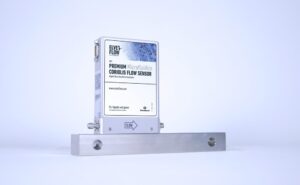
or our premium Coriolis flow sensor
(BFS, suitable for both liquid and gas)
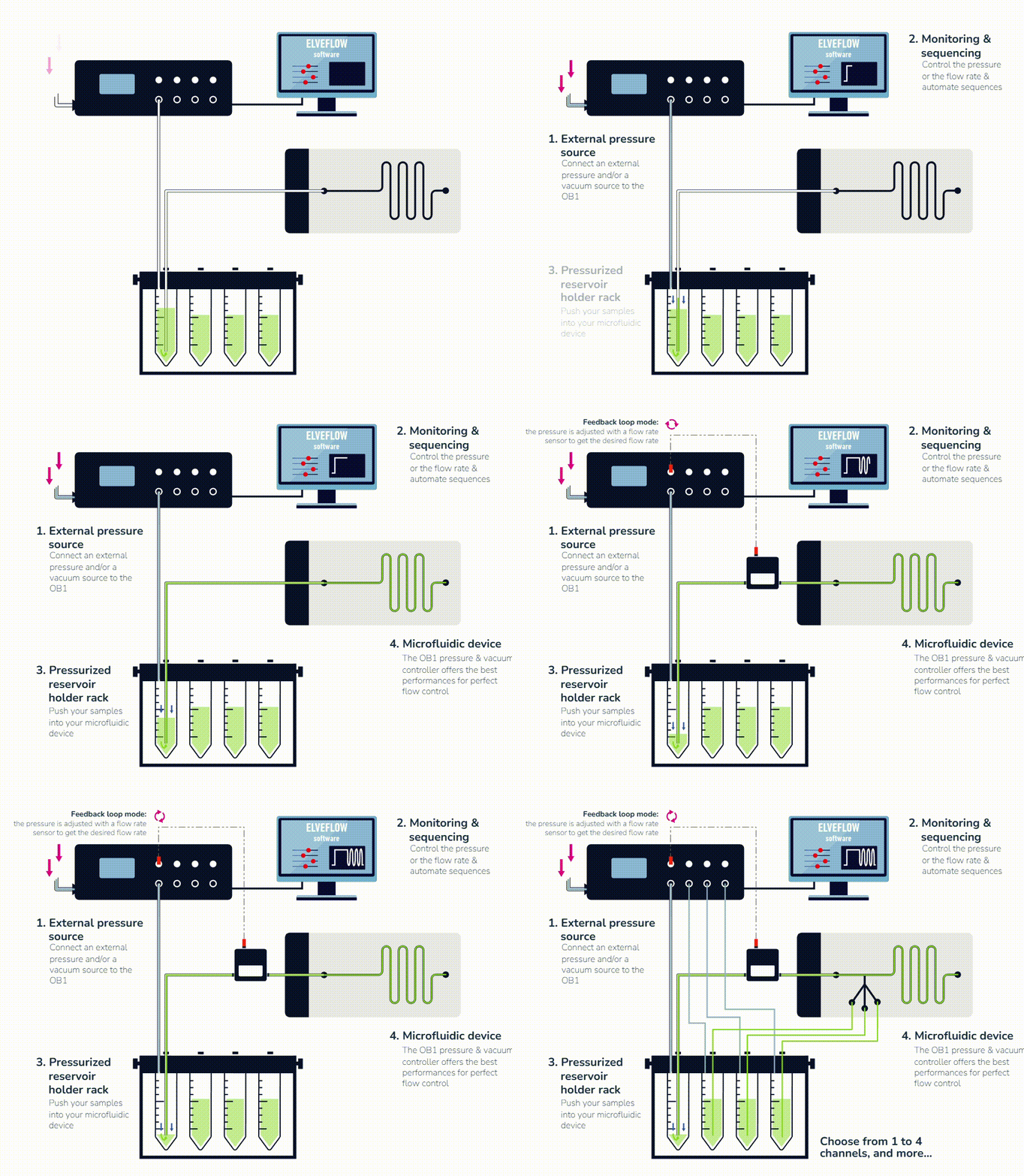
to directly control the flow rate in your chip. The system continuously calculates the pressure and maintains the desired and constant flow rate.
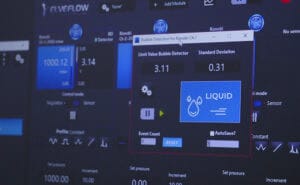
Single and intuitive software to get started in a few clicks and automate complex and long experiments.
The SDK libraries allow you to control the OB1 MK4 using your own code while connecting it to other instruments.
The MK4 is also equipped with UART communication protocol in addition to the ESI and SDKs control, allowing it to communicate with most control systems, such as Mac, Linux, Arduino, PLC.
The OB1 MK4 can be used on a bench setup or embedded in your own product.
Elveflow has a solution for every step of your research & development.
Discover our
OB1 MK4 OEM solution.
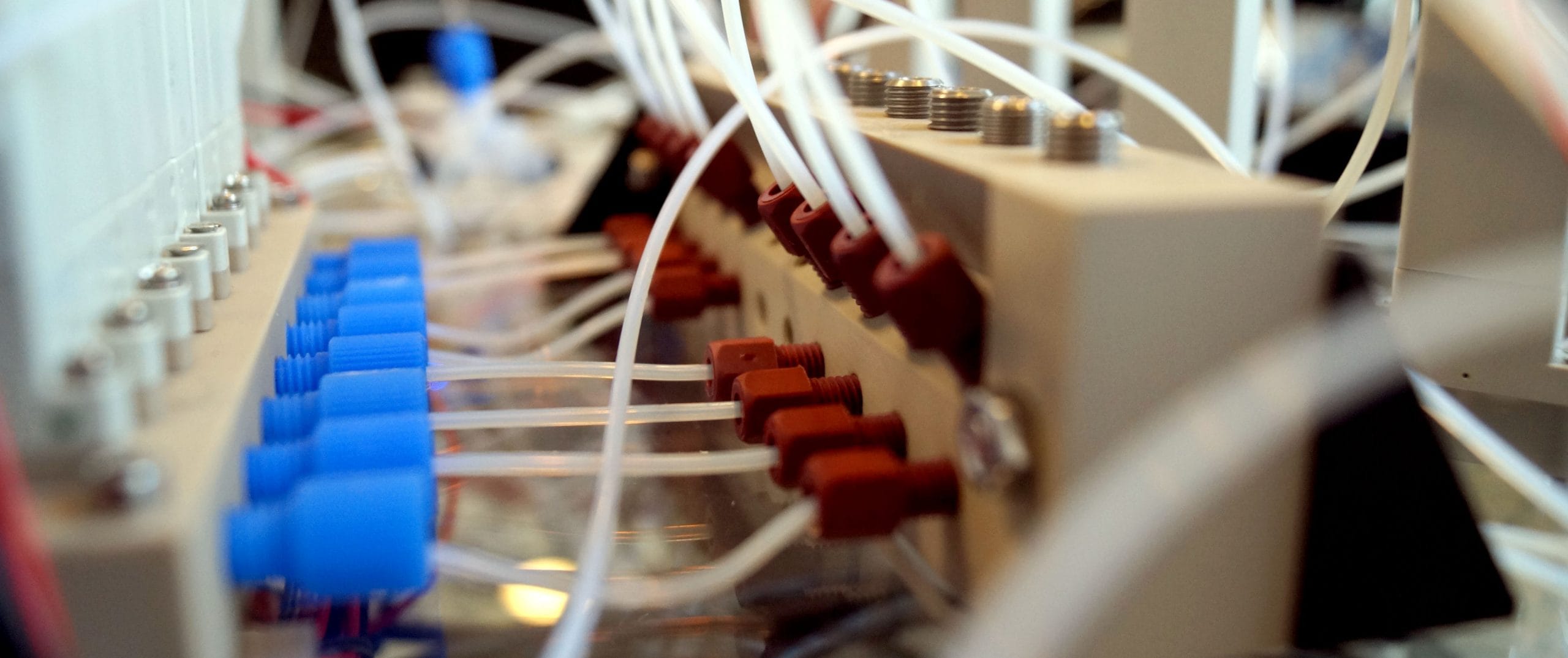
Thanks to its ultra-fast response time, high stability, and precise flow control, the OB1 pressure controller is a preferred choice for a wide range of liquid handling microfluidic applications, compared to syringe pumps or peristaltic pumps. Combined with precision flow sensors (like MFS or BFS), the OB1 pressure controller can accurately control flow rate in any microfluidic setups. Below is an overview of how pressure-driven flow control improves research across different domains.
Droplet Microfluidics
Flow control microfluidics offers unmatched stability and responsiveness when generating monodisperse droplets in microchannels. The precise flow control is essential for the generation of identical droplets avoiding most post-synthesis steps. This monodispersity is essential in applications like digital PCR, single-cell analysis, or encapsulation. Explore droplet generation setup
Alginate Bead Generation
In biomedical research, alginate beads are used to encapsulate cells or molecules. Pressure-driven systems allow fine-tuned control over flow rates, ensuring uniform bead size and reliable encapsulation efficiency. See the alginate bead pack.
Cell Perfusion
Pressure-based perfusion ensures bubble-free, pulsation-free delivery of nutrients or drugs to cultured cells over extended periods, ideal for mimicking physiological flow conditions. Discover perfusion setup
Organ-on-a-Chip
Simulating organ-level responses on chips requires controlled fluid environments. Pressure-driven systems provide the accuracy and reactivity needed to replicate dynamic flow patterns and shear stress. Learn about Organ-on-a-Chip systems
Cell Confinement Assays
Experiments that study how cells adapt to physical constraints benefit from stable pressure control to reproducibly apply mechanical stress. See confinement assay example
Cell Constriction Assays
Revealing cellular responses to fibrotic environments or disease models requires reproducible deformation of cells, enabled by finely tuned pressure-controlled flows. View ischemia model example
Cell Trapping & Synthetic Compartments
Pressure-driven flows help trap and localize cells or materials in adapted microfluidic chips, useful in synthetic biology or compartmentalization studies. Read the synthetic cells study
Sequential Injection & Mixing
Delivering fluids in a precise sequence or generating on-chip gradients requires fast and programmable flow transitions. Pressure controllers enable seamless transitions between multiple fluid inlets. Explore the injection pack
Recirculation
Some in vitro assays require long term dynamic flow of reagents or cell culture media. In most cases it is essential to reuse the media, in order to mimic physiological conditions or avoid expenses. Using pressure-based flow control, one-way recirculation is possible to program for long term experiments.Learn about the recirculation setup
Flow Chemistry
Pressure-driven systems provide accurate reagent dosing and fast startup/shutdown, essential for reaction optimization in continuous-flow chemistry. This is particularly useful in the development of immunoassays and biosensors. See flow chemistry application
Liquid-Phase Electron Microscopy (LPEM)
Stable, pulseless flow is critical for imaging samples in real time at the nanoscale. Pressure control allows precise delivery of fluids during live-cell imaging under an electron beam, especially to study samples in their natural environment. Explore LPEM research
Light-Field Flow Cytometry (LFC)
In high-throughput single-cell analysis, stable and controlled flow conditions are key to accurate imaging and data capture. Pressure-based systems enable high-speed and consistent sample handling. Learn about 3D LFC
Enhanced Oil Recovery (EOR)
Microfluidic chips simulating porous media allow researchers to visualize oil displacement mechanisms. Pressure control enables fine adjustment of flow to mimic subsurface conditions with high reproducibility. Read the full EOR review
Cosmetic Formulation & Testing
Microfluidics offers new possibilities for precision formulation of cosmetic emulsions and nano-encapsulation of active ingredients. Pressure-driven flow ensures reproducibility and scalability for testing stability, texture, or skin permeability on-chip. Explore cosmetic applications
Lab-on-a-Chip Platforms
At the core of any lab-on-a-chip system is the need for precise, responsive, and stable flow control, features inherently supported by pressure-driven microfluidics. Whether it’s diagnostics, environmental sensing, or point-of-care testing, the OB1 system provides the control backbone required for success. Discover some lab-on-chip examples in this review
For all publications featuring our products, please click here.
For all application notes based on our product, please click here.
For reviews of our product, please click here.
| OB1 MK4 | |||||
|---|---|---|---|---|---|
| PNEUMATIC SPECIFICATION | |||||
| Channel pressure range | 0 to 200 mbar(1) (0 to 2.9 psi) |
0 to 2,000 mbar(1) (0 to 29 psi) |
0 to 8,000 mbar(1) (0 to 116 psi) |
-900 to 1,000 mbar(1) (-13 to 14.5 psi) |
-900 to 6,000 mbar(1) (-13 to 87 psi) |
| Pressure stability(2) | 0.015 % FS(1) 0 µbar (0.0004 psi) |
0.005 % FS(1) 100 µbar (0.0014 psi) |
0.006 % FS(1) 500 µbar (0.007 psi) |
-900 to 500 mbar | -900 to 2,000 mbar |
| 0.005 % FS(1) 100 µbar (0.0014 psi) |
0.005 % FS(1) 350 µbar (0.005 psi) |
||||
| 500 to 1,000 mbar | 2,000 to 6,000 mbar | ||||
| 0.007 % FS(1) 150 µbar (0.0021 psi) |
0.007 % FS(1) 525 µbar (0.0076 psi) |
||||
| Response time(3) | Down to 10 ms | ||||
| Setting time(4) | Down to 50 ms | ||||
| Minimum pressure increment | 0.006 % FS(1) 12 µbar (0.00017psi) |
0.006 % FS(1) 120 µbar (0.0017 psi) |
0.006 % FS(1) 480 µbar (0.007 psi) |
0.0064 % FS(1) 120 µbar (0.0017 psi) |
0.0064 % FS(1) 420 µbar (0.006 psi) |
| Pressure supply | 1.5 bar (or Max pressure + 0.5 bar) to 10 bar Non corrosive, non explosive, dry and oil-free gases, e.g. air, argon, N2, CO2, … |
||||
| Input vacuum(5) | / / |
Any value from -0.7 to -1 bar Compatible with vacuum pump or vacuum line |
|||
| Input pneumatic connector | 6 mm push-in | ||||
| Output pneumatic connector | 4 mm push-in | ||||
| Liquid compatibility | Non contact pump Any aqueous, oil, or biological sample solution. |
||||
| FLOW CONTROL | |||||
| Flow sensor compatibility | Compatible with the whole MFS and BFS range Monitoring and feedback loop flow control available | ||||
| Flow sensor compatibility | From 0,1 µL/min to 500 mL/min (indicative, please refer to the MFS and BFS series) | ||||
| Flow sensor compatibility | Non-contact pump Any aqueous, oil, or biological sample solution. | ||||
| CONTROL & MONITORING | |||||
| Software control | Elveflow Smart Interface – Windows 10, 11, both 32 and 64 bit versions supported | ||||
| Software Development Kit | Libraries available: Matlab, Python, LabView, C++ | ||||
| Flow sensor compatibility | Non-contact pump Any aqueous, oil, or biological sample solution. – Windows 10, 11, both 32 & 64 bit versions supported Serial/UART communication protocol on request | ||||
| Data management | Possibility to log and extract data (CSV), channel and sensor detailed information using ESI | ||||
| Input profiles | Possibility to load profiles: ramp, sine, triangle, square, or custom | ||||
| Automation | Generate step-by-step sequences using the ESI built-in sequence management Log and export custom configurations (CSV) | ||||
| Screen | LCD screen showing pressure and sensor flow rate in real time | ||||
| ELECTRICAL SPECIFICATIONS | |||||
| Voltage | 24V | ||||
| Typical power | 12W | ||||
| Power connection | DC power connector, Plug, 3A, 2.1mm, 12mm | ||||
| Interface | USB Type B | ||||
| Communication type | Serial | ||||
| Sensor connection | M8 4-pins, one connector per channel | ||||
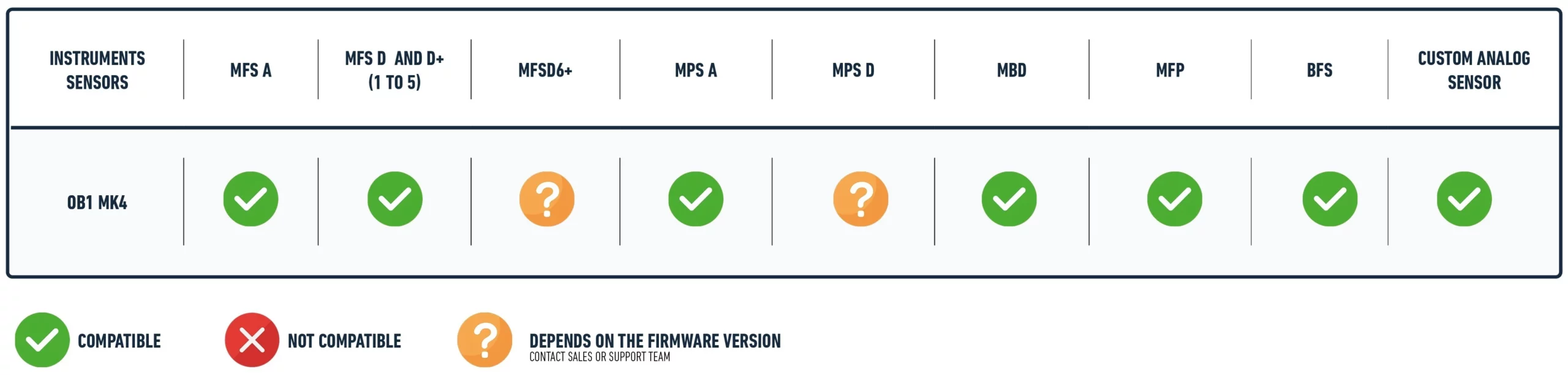
| Compatibilit | Elveflow sensors: MFS, BFS, MPS, MFP, MBD Custom sensors: 5 to 24V supply voltage, 0 to 10V readout voltage | ||||
| Triggers | Input and Output TTL signal 0V or 5V | ||||
| Supply Voltage Range (V) | 100 to 240 VAC | ||||
| Supply AC Frequency (Hz) | 50 to 60 Hz | ||||
| Maximum Output Current (A) | 1.67 A | ||||
| Maximum Output Power (W) | 40 W | ||||
| MECHANICAL SPECIFICATIONS | |||||
| Dimensions (length x width x height) | 240 x 223 x 83 mm | ||||
| Weight | 1.4 kg to 2.9 kg | ||||
(1) Max pressure value might vary by +/- 2.5% (2) Pressure stability (standard deviation) measured over the full pressure range with an external high accuracy pressure sensor (Druck DPI150) (3) Time required to reach 5% of the setting point. Depending on your computer’s operating system (4) Time required to reach 95% of the set point. Volume dependent – Measurement was done on 12 mL reservoir for a set point from 0 to 200 mbar (5) A vacuum source is mandatory for calibration and use of dual channels even if the channels are to be used in pressure only.
ESI is Elveflow’s dedicated software interface, built to make life easier for experimenters. It is perfectly adapted for the control of simple and complex setups and workflow automation. It integrates several modules that make time-consuming and painful tasks simple. It comes with SDK libraries to control the Elveflow system from your own code.
The OB1 control window allows to:

For more details about Pressure driven flow control, please read this application note.

Check our MFS flow sensor >>

 Job
Job Collaborations
 Customer
 Other
Other